
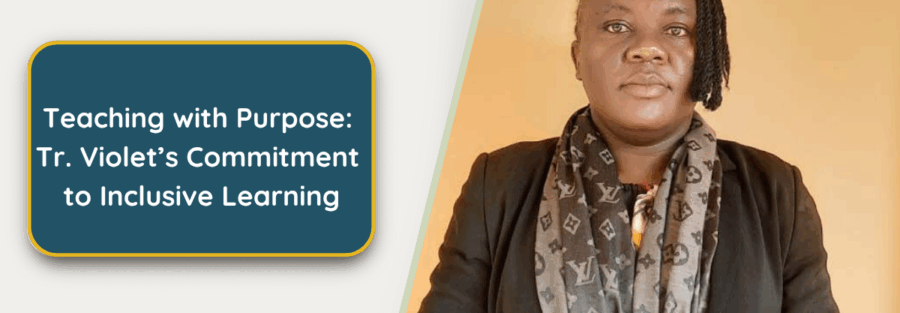
By the time you finish speaking with Tr. Violet, you’re left with a profound sense of what it means to teach with heart, purpose, and reflection. A Grade 6 teacher at Toi Primary in Kibra, Nairobi, Violet empowers learners, learns from them, and builds a classroom community where discipline is shared, and every learner feels seen.
Across many public schools in Kenya, teachers are working with limited resources, overcrowded classrooms, and rising learner needs. Yet research continues to show that inclusive, learner-centered teaching can significantly improve outcomes, even in the most challenging settings. For this to happen, however, teachers must be empowered, not left to figure it out alone.
This is where the partnership between Shining Hope for Communities (SHOFCO) and Dignitas becomes essential. Through ongoing training and coaching, Tr. Violet has gained new tools, but more importantly, a renewed belief in her capacity to lead change in her own classroom.
“I wouldn’t say whatever I learned back in college is working right now,” she reflects. “This training has been a very big eye-opener, especially when it comes to classroom management.”
Her shift in mindset is reshaping how she connects with learners—and how they show up in return.
Discipline Through Shared Responsibility
Like many teachers in Kenya and beyond, Violet once viewed classroom discipline as something that required control, sometimes even resorting to punishment. But through the training and coaching she’s received, she has moved towards strategies that are participatory, child-centered, and sustainable.
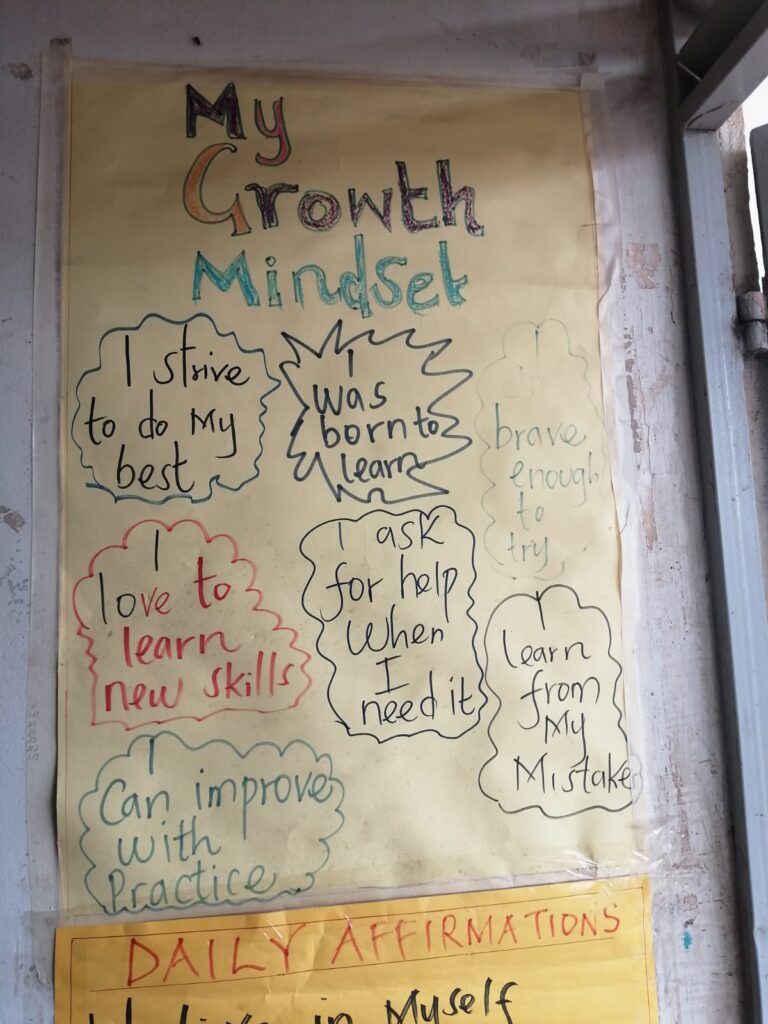
“I used to just write rules and post them on the walls,” she says. “But now, we discuss rules, rewards, and consequences as a class. The learners own them. They even police each other respectfully.”

Her current approach includes the following strategies:
- Co-creation of Rules: Instead of rules being imposed, she involves her learners in crafting them based on real classroom experiences.
- Peer Accountability: Learners hold each other accountable; even in her absence, class monitors report on cooperation, and classmates remind each other of agreed-upon expectations.
- Restorative Consequences: Instead of punitive measures, consequences focus on restitution and reflection, such as staying in to clean the classroom if a rule is broken.
Recognition Over Rewards: Violet emphasizes non-monetary rewards, like public recognition in class or during assembly, which have a lasting emotional impact on learners.
This shift toward learner engagement echoes broader education research. UNESCO has emphasized that positive discipline strategies are key to creating safe, inclusive learning environments, especially in marginalized communities.
“When the rules come from them, they carry weight,” Violet explains. “Even when I’m not in class, they follow through. I no longer have to raise my voice.”
A Shift Towards Learner-Centered Classrooms
In Kenya, corporal punishment is outlawed. But the reality on the ground might sometimes be different. Tr. Violet is among a growing group of teachers committed to eliminating harmful discipline and instead promoting child-friendly, rights-respecting practices.
“Before the Teacher Service Commission banned the cane, many of us used it without thinking,” she admits. “But now, I don’t even consider it. And the learners don’t expect it either. We’ve created better systems.”
She also speaks honestly about the role parents and guardians play: “We have regular meetings and a WhatsApp group. We talk to them about discipline and remind them that harsh punishment, even at home, is not okay.”
In communities like Kibra, where some children live with overwhelmed guardians or extended family, this communication is vital. Sometimes it involves social workers from SHOFCO to ensure a child’s safety and emotional well-being.
Teaching Every Learner Differently
Beyond discipline, Violet’s biggest takeaway from this training has been the power of differentiated instruction, the idea that every learner processes information differently and deserves teaching tailored to their style.
“For so long, I used the lecture method. I thought it was working. But I realized some learners need to listen, some need to see, and some need to do.”
This realization has changed her lesson planning entirely. Now, she designs lessons with every learner in mind, whether visual, auditory, or kinesthetic.
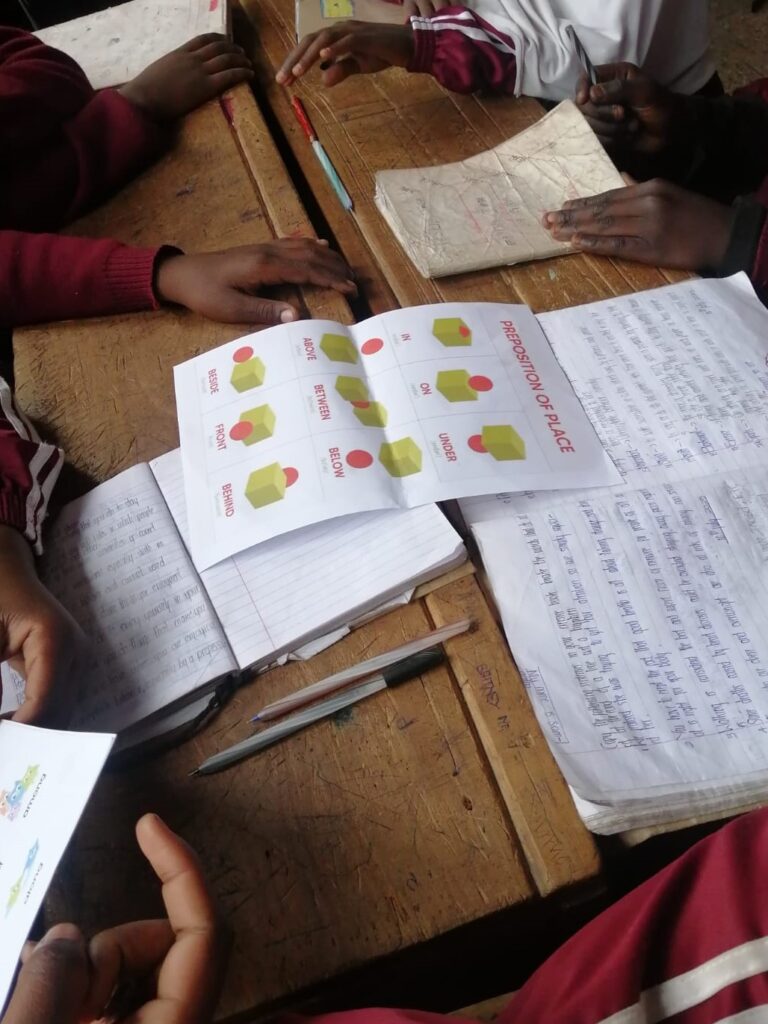
Learners are as diverse as the communities they come from. Educational research commonly identifies three broad learning styles, each reflecting how a student best absorbs and works with information:
- Visual learners– they process information best when they can see it. They benefit from diagrams, color-coded charts, images, maps, and written instructions.
- Auditory learners- they retain information most effectively by listening. They thrive during discussions, oral instructions, storytelling, and songs. For these children, repeating information aloud or talking through concepts can significantly support their understanding and memory.
- Kinesthetic learners-they need to move, touch, and participate physically in their learning process. They respond well to hands-on activities, experiments, practical demonstrations, and role-playing. These learners often excel during group work that involves building, acting, or manipulating materials.
- Auditory learners- they retain information most effectively by listening. They thrive during discussions, oral instructions, storytelling, and songs. For these children, repeating information aloud or talking through concepts can significantly support their understanding and memory.
Organizations like the Global Partnership for Education have long advocated for teacher professional development that emphasizes learner diversity. But these global efforts only come to life through the actions of teachers like Tr. Violet, who are turning training into real change in their classrooms, and beyond.
What makes Tr. Violet’s work remarkable is her eagerness to share what she’s learned. “Any time I meet a teacher who hasn’t gone through this program/training, I challenge them. I say, ‘Let’s not waste these kids.’ We need to create lesson plans that include every learner.”
Tr. Violet’s story shows that inclusive education doesn’t begin with a policy but with a teacher. Her commitment challenges us all to see every child, and support every teacher, as capable of leading meaningful change.
This article is inspired by the experiences of Tr. Violet and the partnership between Shining Hope for Communities (SHOFCO) and Dignitas, advancing inclusive education in Kenya.
1 Comment
Otieno Selphas Ouso
She reminds me of the wonderful training Dignitas team endowed me together with my colleague teachers in Homabay County. The training has helped eradicate the old and outdated approaches in teaching and learning in our schools. Creating a more conducive learning environment.